
Now it came to pass, afterward, that He went through every city and village, preaching and bringing the glad tidings of the kingdom of God. And the twelve were with Him, and certain women who had been healed of evil spirits and infirmities—Mary called Magdalene, out of whom had come seven demons, and Joanna the wife of Chuza, Herod’s steward, and Susanna, and many others who provided for Him from their substance. (Luke 8:1-3)
As Jesus continued His work through every city and village of Galilee, He brought with Him the twelve – those men specifically called to be His 12 disciples, and eventually apostles of the first church. The Savior’s preaching brought glad tidings, meaning He brought good news, announcing that God’s Messiah and King was present among them.
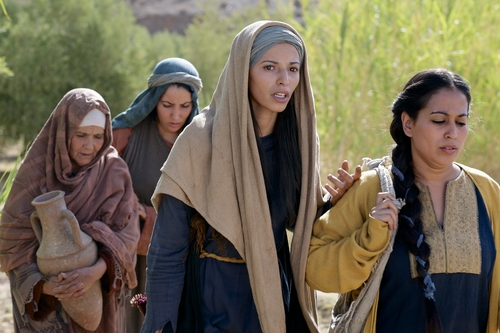
What’s most interesting in these three verses is the mention of certain women who followed Jesus. Luke noted this in his account of the life of Jesus because it was unusual. It wasn’t strange for a rabbi to have a group of male disciples with him, chosen to be students. It was out of the ordinary to also have another group of certain women who followed, learned, and helped. To be sure, Jesus had a different attitude towards women than the religious leaders and teachers of that day, who refused to teach women and regarded them as less valuable for God’s kingdom.
One of these women was Mary called Magdalene. This Mary had been demon possessed until Jesus freed her. Many also assume that she was given over to immorality, but this isn’t said by the Biblical text.
Another was Joanna the wife of Chuza, Herod’s steward. This meant that Joanna’s husband had an important, trusted position with the ruler Herod. She was a woman of status. William Barclay noted that it was amazing to find Mary Magdalene (a woman with a troubled past) and Joanna (a lady of high standing) together with Jesus. In fact, Mary and Joanna were among the first witnesses of Jesus’ resurrection (Luke 24:10).
Yet, the list of women who helped Jesus was not limited to Mary and Joanna. We read that many others who provided for Him from their substance. That phrase provided for translates the ancient Greek word diakonia, from which we get our modern word “deacon.” These women practically provided for and helped Jesus and the disciples and did so at their own expense. This was good, generous, helpful, service for the Savior and those working with Him.
That says something good about these women, whom we can consider to be often forgotten heroes in the ministry of Jesus. This is especially true of the many others we don’t even know the name of.
It also says something good about the true humble nature of Jesus, who willingly made Himself dependent upon others. He didn’t have to; Jesus could have just created all the money or food they needed. Jesus was humble and godly enough to receive from others – even often forgotten heroes.
Click here for David’s commentary on Luke 8
Click Here for Daily Devotionals from David on Apple Podcasts